Brain tumor surgery in india
Brain Tumor Surgery in India: A Comprehensive Guide
Looking for Brain Tumor Surgery in India or a Top 10 Neurosurgeon at an affordable cost in different cities like Delhi, Mumbai, Chennai, Kolkata, and Bangalore? Here, we answer the question and explain how to choose the top 10 brain tumor treatment centers in India for better results. Still, have questions? SUBMIT ENQUIRY
Introduction
Brain tumor surgery is a critical and intricate procedure performed to remove or reduce brain tumors, which can be either benign (non-cancerous) or malignant (cancerous). The complexity of brain tumor surgery requires advanced medical expertise, state-of-the-art technology, and exceptional care. India has emerged as a leading destination for brain tumor surgery, offering high-quality medical services at a fraction of the cost compared to Western countries. This comprehensive guide delves into the details of brain tumor surgery in India, including types of brain tumors, surgical procedures, costs, top hospitals, and renowned surgeons.
Understanding Brain Tumors
Types of Brain Tumors
- Primary Brain Tumors: These originate in the brain and include:
- Gliomas: The most common type, including astrocytomas, oligodendrogliomas, and ependymomas.
- Meningiomas: Tumors that develop from the meninges (the protective membranes covering the brain and spinal cord).
- Pituitary Adenomas: Tumors arising from the pituitary gland.
- Schwannomas: Tumors of the Schwann cells, which produce the myelin sheath covering nerves.
- Secondary (Metastatic) Brain Tumors: These originate from cancer cells that have spread to the brain from other parts of the body.
Symptoms of Brain Tumors
Symptoms of brain tumors vary depending on the tumor's size, location, and growth rate. Common symptoms include:
- Headaches, often worse in the morning
- Seizures
- Nausea and vomiting
- Vision or hearing problems
- Cognitive or personality changes
- Balance and coordination issues
- Weakness or numbness in limbs
Diagnosis of Brain Tumors
Accurate diagnosis is crucial for effective treatment. Diagnostic procedures include:
- Neurological Examination: Assessing reflexes, muscle strength, coordination, and sensory abilities.
- Imaging Studies:
- MRI (Magnetic Resonance Imaging): Provides detailed images of brain structures.
- CT Scan (Computed Tomography): Helps in identifying the tumor's size and location.
- PET Scan (Positron Emission Tomography): Determines the tumor's metabolic activity.
- Biopsy: A sample of the tumor tissue is examined under a microscope to determine the type of cells.
Surgical Procedures for Brain Tumor Removal
Types of Brain Tumor Surgeries
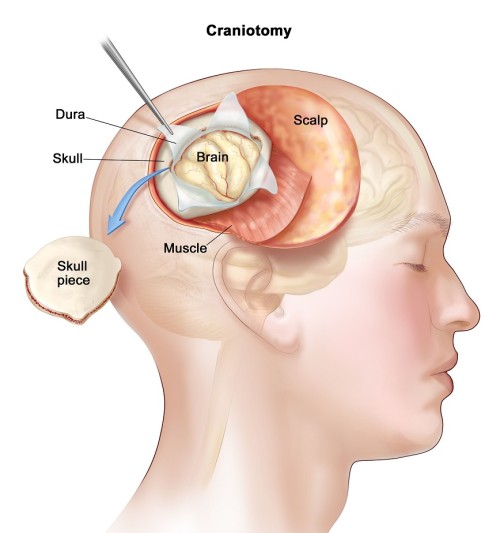
- Craniotomy: The most common procedure where a section of the skull is removed to access the brain and the tumor is excised.
- Endoscopic Skull Base Surgery: Minimally invasive surgery performed through the nasal passages to remove tumors located at the base of the brain.
- Stereotactic Surgery: Uses a three-dimensional coordinate system to locate small brain lesions and remove them with precision.
- Laser Interstitial Thermal Therapy (LITT): A minimally invasive procedure that uses laser energy to destroy tumor cells.
- Awake Brain Surgery: Conducted while the patient is awake to ensure critical brain functions are not compromised.
Pre-Surgical Preparation
Before surgery, patients undergo several preparatory steps, including:
- Detailed imaging studies to map the tumor.
- Pre-operative blood tests and health evaluations.
- Discussions with the surgical team about the procedure, risks, and recovery.
The Surgical Procedure
The procedure typically involves:
- Anesthesia: Administered to ensure the patient is pain-free during surgery.
- Surgical Access: The surgeon makes an incision and removes a portion of the skull (craniotomy) to access the brain.
- Tumor Removal: The tumor is carefully excised, using advanced techniques to minimize damage to surrounding brain tissue.
- Closure: The skull piece is replaced and the incision is closed.
Post-Surgical Care and Recovery
Post-surgery, patients are monitored in the intensive care unit (ICU) for complications such as bleeding or infection. Recovery involves:
- Pain management
- Physiotherapy to regain strength and mobility
- Regular follow-up visits and imaging studies to monitor for tumor recurrence
Cost of Brain Tumor Surgery in India
India offers high-quality brain tumor surgery at a fraction of the cost compared to Western countries. The cost varies depending on factors such as:
- The type and complexity of the surgery
- The hospital and its location
- The surgeon's expertise
- Pre- and post-operative care
Estimated Costs
- Craniotomy: $5,000 - $10,000 USD
- Endoscopic Skull Base Surgery: $6,000 - $12,000 USD
- Stereotactic Surgery: $7,000 - $14,000 USD
- Laser Interstitial Thermal Therapy (LITT): $8,000 - $15,000 USD
These Brain Tumour Surgery Cost in India typically include hospital charges, surgeon's fees, anesthesia, and post-operative care.
Top Hospitals for Brain Tumor Surgery in India
1. All India Institute of Medical Sciences (AIIMS), New Delhi
AIIMS is a premier medical institution known for its state-of-the-art facilities and highly experienced neurosurgeons. It offers advanced diagnostic and treatment options for brain tumors.
2. Fortis Memorial Research Institute, Gurgaon
Fortis is renowned for its world-class neurosurgery department, equipped with the latest technology and a team of skilled neurosurgeons specializing in brain tumor surgeries.
3. Apollo Hospitals, Chennai
Apollo Hospitals is a leading healthcare provider in India, known for its cutting-edge technology and experienced medical professionals. The neurosurgery department offers comprehensive care for brain tumor patients.
4. Manipal Hospital, Bangalore
Manipal Hospital is recognized for its expertise in neurosurgery and its state-of-the-art facilities. The hospital offers advanced treatment options for brain tumors, including minimally invasive surgeries.
5. Medanta - The Medicity, Gurgaon
Medanta is a multi-specialty hospital with a dedicated neurosurgery department. The hospital is known for its advanced technology and highly skilled surgeons who specialize in brain tumor surgeries.
6. Tata Memorial Hospital, Mumbai
Tata Memorial Hospital is a leading cancer treatment center in India. The neurosurgery department offers comprehensive care for brain tumor patients, including advanced surgical techniques and post-operative care.
7. Narayana Health, Bangalore
Narayana Health is known for providing high-quality, affordable healthcare. The hospital’s neurosurgery department is equipped with the latest technology and experienced surgeons for brain tumor treatment.
Renowned Neurosurgeons in India
1. Dr. V. P. Singh
- Affiliation: Medanta - The Medicity, Gurgaon
- Specialty: Neurosurgery, brain tumor surgery
- Reputation: Highly regarded for his expertise in complex brain tumor surgeries
2. Dr. Sandeep Vaishya
- Affiliation: Fortis Memorial Research Institute, Gurgaon
- Specialty: Neurosurgery, minimally invasive brain tumor surgery
- Reputation: Known for his precision and successful outcomes
3. Dr. G. Balamurali
- Affiliation: Kauvery Hospital, Chennai
- Specialty: Neurosurgery, spinal surgery
- Reputation: Renowned for his experience and expertise in brain tumor surgeries
4. Dr. K. Sridhar
- Affiliation: Global Hospital, Chennai
- Specialty: Neurosurgery, pediatric neurosurgery
- Reputation: Known for his skill in treating complex brain tumors
5. Dr. Rajan Shah
- Affiliation: Nanavati Super Speciality Hospital, Mumbai
- Specialty: Neurosurgery, brain tumor surgery
- Reputation: Highly experienced with a focus on advanced neurosurgical techniques
6. Dr. Anil Kumar Kansal
- Affiliation: BLK Super Speciality Hospital, New Delhi
- Specialty: Neurosurgery, spinal surgery
- Reputation: Esteemed for his successful treatment of brain tumors
Innovative Techniques and Technologies in Brain Tumor Surgery in India
1. Intraoperative MRI
Intraoperative MRI provides real-time imaging during surgery, allowing surgeons to accurately locate and remove tumors while preserving healthy brain tissue.
2. Neuronavigation
Neuronavigation systems use advanced imaging techniques to guide surgeons during brain tumor removal, enhancing precision and minimizing damage to surrounding tissues.
3. Gamma Knife Radiosurgery
Gamma Knife radiosurgery is a non-invasive procedure that uses focused radiation beams to target and destroy brain tumors with high precision, minimizing damage to healthy tissue.
4. Endoscopic Techniques
Endoscopic techniques involve using small cameras and instruments inserted through tiny incisions to remove tumors, resulting in less trauma and quicker recovery times.
5. Awake Craniotomy
Awake craniotomy is performed while the patient is conscious, allowing surgeons to monitor brain function and ensure critical areas are not damaged during tumor removal.
Post-Surgical Care and Rehabilitation
Immediate Post-Surgical Care
After brain tumor surgery, patients are closely monitored in the ICU for potential complications such as bleeding, infection, or swelling. Pain management and infection prevention are critical during this phase.
Rehabilitation
Rehabilitation is essential for recovery and includes:
- Physical Therapy: Helps regain strength and mobility.
- Occupational Therapy: Aids in improving daily living skills.
- Speech Therapy: Assists in regaining communication skills if affected.
- Psychological Support: Provides emotional support and helps cope with the impact of the tumor and surgery.
Follow-Up Care
Regular follow-up visits with the neurosurgeon and oncologist are necessary to monitor for any signs of tumor recurrence and manage any long-term effects of the surgery.
Success Rates and Patient Outcomes
The success rates of brain tumor surgeries in India are comparable to those in advanced countries, thanks to the expertise of Indian neurosurgeons and the availability of state-of-the-art technology. Factors influencing success rates include:
- Type and Location of the Tumor: Some tumors are more accessible and easier to remove completely.
- Patient’s Age and Health: Younger, healthier patients tend to recover better.
- Surgeon’s Experience: Experienced surgeons have higher success rates.
Patient Testimonials
Many international patients have shared positive experiences about their treatment in India, highlighting the high-quality care, affordability, and compassionate support they received.
Brain Tumour Surgery Cost in India: Treatment, Factors & FAQs
The brain tumour surgery cost in India can vary significantly depending on the type, size, location, complexity of the tumour, surgeon’s experience, hospital, and treatment required after surgery. Patients looking for brain tumor surgery cost in India may find that costs differ between government and private hospitals and between different cities.
The brain tumour operation cost in India generally includes the surgeon's fee, hospital charges, diagnostic tests, anesthesia, ICU stay, medicines, and follow-up care. The cost of brain tumour removal surgery in India may also increase when advanced surgical techniques, longer hospitalization, or additional treatments are required.
Brain Tumour Treatment Cost in India
The overall brain tumour treatment cost in India depends on whether the patient requires surgery alone or a combination of surgery, radiation therapy, chemotherapy, targeted treatment, or rehabilitation. Therefore, the brain tumor treatment cost in India cannot be accurately determined without evaluating the patient's diagnosis and treatment plan.
For patients searching for the average cost of brain tumour surgery in India, it is important to remember that an initial estimate may change after imaging, biopsy, or detailed evaluation by a neurosurgeon.
Brain Tumour Surgery Cost by City and Hospital
The brain tumour surgery cost in Delhi, brain tumour surgery cost in Mumbai, brain tumour surgery cost in Bangalore, brain tumour surgery cost in Hyderabad, brain tumour surgery cost in Chennai, and brain tumour surgery cost in Kolkata can vary according to hospital infrastructure and specialist fees.
Similarly, the brain tumour surgery cost at a private hospital in India is generally different from the brain tumour surgery cost in a government hospital in India. Patients should ask the hospital what is included in the estimated treatment package.
Cost of Different Brain Tumours
The treatment cost can also vary according to the diagnosis. For example, the glioblastoma surgery cost in India, meningioma surgery cost in India, pituitary tumour surgery cost in India, and acoustic neuroma surgery cost in India may differ because these tumors can require different surgical approaches and postoperative treatments.
The brain tumour removal cost in India may therefore be higher or lower depending on the complexity of the procedure.
What Affects Brain Tumour Surgery Cost?
Several factors can affect the brain tumour surgery price in India, including:
- Tumour type, size, and location
- Complexity and duration of surgery
- Neurosurgeon and specialist fees
- Hospital and ICU charges
- Diagnostic tests and imaging
- Anesthesia and medicines
- Length of hospital stay
- Need for radiation or chemotherapy
- Postoperative rehabilitation and follow-up
Patients should also check whether their brain tumour surgery insurance coverage in India includes hospitalization, surgery, medicines, and related treatment.
Frequently Asked Questions
How much does brain tumour surgery cost in India?
The cost varies according to the patient's condition, hospital, city, and surgical complexity. A neurosurgical consultation is required for an individualized estimate.
What is the cost of brain tumour removal surgery in India?
The cost of brain tumor removal surgery in India depends primarily on the tumour type, location, surgical complexity, and hospital.
Is brain tumour surgery expensive in India?
Compared with many countries, India can offer relatively cost-effective neurosurgical treatment, but the actual expense varies considerably between hospitals and patients.
Is brain tumour surgery covered by insurance in India?
Many health insurance policies may cover medically necessary tumour surgery, but coverage, exclusions, limits, and waiting periods vary by policy. Patients should confirm the details with their insurer.
What is included in brain tumour surgery cost?
Depending on the hospital, the estimate may include surgery, surgeon and anesthesia charges, hospital stay, ICU care, investigations, medicines, and other services. Patients should request a detailed cost estimate before treatment.
How long is hospital stay after brain tumour surgery?
Hospitalization varies depending on the surgery and the patient's recovery. Some patients may require intensive monitoring and rehabilitation after the operation.
Is brain tumour surgery successful in India?
Brain tumour surgery is performed by experienced neurosurgical teams in many Indian hospitals. The outcome depends mainly on the tumour's type, location, size, biological characteristics, and the patient's overall condition.
Which hospital is best for brain tumour surgery in India?
There is no single best hospital for every patient. The choice should consider the neurosurgical team's experience, available technology, ICU and rehabilitation facilities, tumour-specific expertise, and the patient's individual needs.
FAQ. Brain tumors are very different from one another, so the exact tumor type, grade, location, size, molecular features, and the person's overall health all affect the answer.
1. Is removing a brain tumour risky?
Yes. Brain surgery carries risks such as bleeding, infection, seizures, swelling, and injury to nearby brain tissue, which can affect movement, speech, vision, memory, or other functions. However, modern neurosurgical techniques can make surgery safer, and the risks vary greatly depending on the tumor's location and type.
2. Is a 5 cm brain tumor big?
A 5 cm tumor is generally considered large, but size alone does not determine how dangerous it is. A smaller tumor in a critical brain region can be more difficult to treat than a larger tumor in a less sensitive location.
3. Is a brain tumor 100% curable?
No. There is no 100% cure rate for all brain tumors. Some benign or slow-growing tumors can potentially be completely removed and cured, while some malignant tumors are difficult to eradicate completely.
4. Is brain tumor surgery successful?
Brain tumor surgery can be very successful, particularly when the tumor can be safely removed. Sometimes the surgeon intentionally leaves some tumor behind if removing it completely would damage important brain functions. Surgery may also be combined with radiation, chemotherapy, targeted therapy, or other treatments.
5. What are 6 warning signs of a brain tumor?
Six possible warning signs are:
- Persistent or worsening headaches
- New seizures
- Vision changes
- Weakness or numbness, particularly on one side
- Problems with speech, memory, thinking, or personality
- Balance or walking difficulties
Nausea, vomiting, dizziness and hearing changes can also occur. These symptoms do not necessarily mean someone has a brain tumor.
6. What age do brain tumors start?
Brain tumors can occur at any age. Some types are more common in children, while others occur more frequently in adults or older people.
7. Can lack of sleep cause brain tumors?
There is no established evidence that ordinary lack of sleep causes brain tumors. Most primary brain tumors have no clearly identifiable cause.
8. What are the first stages of a brain tumor?
Brain tumors aren't generally described as having "stages" in the same way as many other cancers. They are commonly classified by type and grade, with grades 1–4 describing how aggressive the tumor is. Early symptoms can be subtle or absent, depending on where the tumor develops.
9. What happens if a brain tumor is not treated?
It depends on the tumor. Some slow-growing, benign tumors can be safely monitored without immediate treatment. Others may continue growing and cause pressure or damage to areas responsible for movement, speech, vision, memory, or other functions. Untreated aggressive tumors can become life-threatening.
10. What kind of doctor treats brain tumors?
Treatment is usually provided by a multidisciplinary team, which may include:
- Neurosurgeon – performs brain surgery
- Neuro-oncologist/medical oncologist – manages cancer medicines and overall tumor treatment
- Radiation oncologist – provides radiation treatment
- Neurologist – evaluates neurological symptoms and complications
11. Which is the best treatment for brain tumors?
There isn't one best treatment for every tumor. Depending on the situation, treatment may include surgery, radiation therapy, radiosurgery, chemotherapy, targeted therapy, or active surveillance. The choice depends on the tumor's type, size, grade, location and molecular characteristics.
12. How to stop brain tumors from growing?
There is no proven home remedy or diet that can reliably stop a brain tumor from growing. Medical treatment may control growth, depending on the tumor. Options include surgery, radiation, chemotherapy, targeted treatment, and—when appropriate—clinical trials.
13. What is the newest treatment for brain tumors?
There isn't one single "newest treatment." Current treatment can include precision/targeted therapies, tumor-treating fields for certain tumors, advanced radiation techniques, molecularly guided treatment, and clinical trials. Which newer treatment is appropriate depends heavily on the tumor's pathology and molecular profile.
14. Which brain tumor cannot be cured?
There is no single brain tumor that can universally be described as "incurable" in every patient. However, some aggressive grade 4 tumors, including glioblastoma, are particularly difficult to cure and frequently require treatment aimed at controlling the disease and prolonging survival.
15. Can you survive a brain tumor without surgery?
Yes, in some cases. Some small, slow-growing or benign tumors can be monitored with regular MRI scans. Other tumors may be treated with radiation, radiosurgery, medication, or combinations of treatments instead of conventional surgery.
16. What is the most serious brain tumor?
Among primary brain cancers, glioblastoma (a grade 4 astrocytic tumor) is one of the most aggressive and difficult-to-treat types. However, seriousness depends on more than the name of the tumor, including its location, molecular characteristics, size, and response to treatment.
17. Can a brain tumor be fully removed?
Sometimes. If the tumor is in a location where it can be safely accessed, surgeons may be able to remove all visible tumor. In other cases, complete removal could cause unacceptable neurological damage, so only as much as can be safely removed is taken out. Additional treatment may then be recommended.
Important: A new seizure, sudden weakness/numbness, sudden difficulty speaking, sudden vision loss, confusion, repeated vomiting, or a sudden/severe worsening headache warrants urgent medical evaluation.
Conclusion
Brain tumor surgery in India is a complex and critical procedure requiring advanced medical expertise and technology. India has established itself as a leading destination for brain tumor surgeries, offering high-quality medical care at a fraction of the cost compared to Western countries. With world-class hospitals, renowned neurosurgeons, and innovative surgical techniques, patients can expect excellent outcomes and compassionate care.
For anyone considering brain tumor surgery, it is essential to be well-informed about the procedure, costs, and the best medical professionals. By choosing the right hospital and surgeon, patients can achieve successful treatment outcomes and improve their quality of life.
Contact Us –
Mohmmad Tarique
WhatsApp - + 91 9582 708 782 / + 91 9999 211 359
Email – treatmentquery@gmail.com