Cancer immunotherapy in india
Dendritic Cell-Based Cancer Immunotherapy in India: A Personalized Treatment Approach
Are you looking for alternative or personalized cancer treatment options in India? Customized Dendritic Cell-Based Cancer Immunotherapy in India is an emerging form of cancer immunotherapy that uses the patient's own immune cells to help the immune system recognize and respond to cancer.
Dendritic cells are specialized antigen-presenting cells of the immune system. They help activate T cells by presenting cancer-associated antigens, potentially directing the immune response toward tumor cells. The National Cancer Institute describes dendritic-cell vaccines as a type of cancer-treatment vaccine being studied across several cancers.
1- How Much Does Dendritic Cell Therapy Cost in India?
The cost of Dendritic Cell Therapy in India can vary considerably depending on the cancer type, stage, treatment protocol, number of doses/cycles, cell-processing laboratory, hospital, and whether it is provided as part of a clinical study.
For website content, a reasonable indicative range is approximately USD 3,500–6,000 per cycle, with some published Indian treatment estimates reporting around ₹4.5 lakh for a six-dose protocol. Other providers report substantially higher overall costs, so a fixed price should not be quoted without reviewing the patient's medical records.
Estimated Dendritic Cell Therapy Cost in India
| Treatment | Approximate Cost |
|---|---|
| Dendritic Cell Therapy – per cycle | USD 3,500–6,000 |
| Six-dose protocol | Approximately 12000 to 20000 USD in some published protocols |
| Diagnostic tests & consultation | Additional |
| PET-CT / biopsy / molecular testing | Additional, if required |
| Hospital stay & accommodation | Additional, depending on treatment plan |
The cost can be higher when customized cell processing, advanced laboratory testing, additional treatment cycles, or combination therapies are required. Published estimates from different Indian providers vary significantly, demonstrating why patients should obtain a case-specific quotation rather than relying on a single standard price.
2- What Determines the Cost?
The final cost of Dendritic Cell Immunotherapy in India depends on:
- Type and stage of cancer
- Previous cancer treatments
- Number of treatment cycles
- Method of collecting and preparing dendritic cells
- Laboratory and cell-processing requirements
- Hospital and oncologist
- Diagnostic investigations
- Combination with chemotherapy, targeted therapy or other immunotherapy
- Length of stay in India
Peace Medical Tourism
Peace Medical Tourism can help international cancer patients obtain the best cancer treatment in India, along with a personalized treatment plan and estimated cost from an appropriate oncology center in India. Patients can share their biopsy/pathology reports, PET-CT/CT scans, previous treatment records, and current medications for an initial medical assessment.
📲 WhatsApp / Viber: +91 9582708782
📧 Email: treatmentquery@gmail.com
Important: Dendritic-cell therapy is not appropriate for every cancer patient, and many customized dendritic-cell approaches remain investigational for particular cancers. A qualified oncologist should evaluate it, and it should not replace proven standard cancer treatment without medical advice.
3- What Is Customized Dendritic Cell-Based Cancer Immunotherapy?
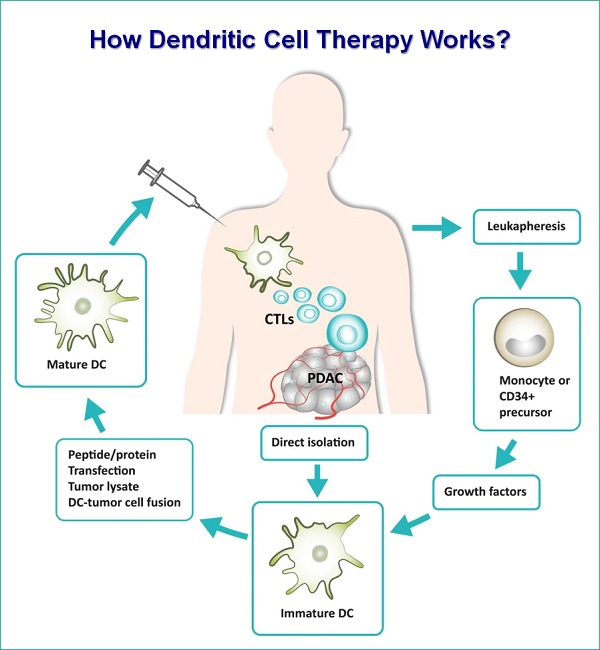
Customized dendritic cell therapy is designed around the individual patient's cancer. In approaches being investigated, immune cells are collected from the patient's blood, dendritic cells are prepared in a laboratory and exposed to selected tumor-associated antigens or tumor material, and the resulting cell-based product is administered back to the patient to stimulate an anti-tumor immune response.
The exact manufacturing and treatment protocol depends on the cancer type, tumor characteristics, treatment history, and clinical protocol. Some current clinical studies use a patient's own dendritic cells loaded with tumor lysate, mRNA, or specific cancer-associated proteins.
4- How Do Dendritic Cells Help Fight Cancer?
The immune system can sometimes recognize abnormal cells, but cancer cells may develop mechanisms that allow them to avoid immune detection.
Dendritic cells can help by:
- Identifying and processing cancer-related antigens
- Presenting these antigens to T cells
- Stimulating cancer-specific immune responses
- Helping T cells recognize cells carrying the targeted cancer antigens
- Potentially supporting a longer-lasting immune response
The goal is to train or strengthen the patient's immune response against cancer, rather than directly destroying tumor cells in the same way as conventional chemotherapy.
5- How Is Customized Dendritic Cell Therapy Performed?
A personalized treatment program may involve several stages:
1. Cancer Evaluation
The patient's diagnosis, pathology reports, imaging, previous treatments, and overall health are reviewed.
2. Collection of Immune Cells
Blood cells may be collected from the patient using a procedure such as leukapheresis.
3. Laboratory Preparation
Dendritic cells are isolated and prepared under specialized laboratory conditions.
4. Antigen Loading
Depending on the treatment protocol, dendritic cells may be exposed to selected tumor antigens, tumor lysate, tumor RNA/mRNA, or other cancer-specific targets.
5. Administration
The prepared dendritic-cell product is administered to the patient according to the treatment protocol. The route and number of doses vary between therapies.
6. Immune and Cancer Monitoring
The patient is monitored through clinical examination, blood tests, imaging, and other appropriate assessments to evaluate safety and response.
Some investigational protocols combine dendritic-cell therapy with other treatments, such as immune checkpoint inhibitors or chemotherapy.
6- Which Cancers May Be Considered?
Dendritic-cell therapies are being investigated for a range of cancers, including:
- Melanoma
- Prostate cancer
- Ovarian cancer
- Breast cancer
- Pancreatic cancer
- Kidney cancer
- Multiple myeloma
- Brain tumors and other cancers
However, evidence and regulatory status vary substantially by cancer type and specific dendritic-cell product. The NCI currently lists active clinical studies involving dendritic-cell approaches for melanoma, ovarian cancer, pancreatic cancer, kidney cancer, multiple myeloma, breast cancer, and other malignancies.
7- Is Dendritic Cell Therapy an Alternative to Standard Cancer Treatment?
It is important to use the term “alternative treatment” carefully. Dendritic-cell immunotherapy is an established area of cancer research, but many customized dendritic-cell therapies remain investigational or are available under specific clinical protocols.
The NCI notes that one dendritic-cell-based cancer treatment vaccine, sipuleucel-T, is FDA-approved for certain men with advanced prostate cancer.
Therefore, patients should not stop chemotherapy, radiotherapy, surgery, targeted therapy, hormone therapy, or other prescribed cancer treatment without discussing it with their oncologist.
Potential Benefits
Depending on the specific therapy and patient's cancer, potential objectives may include:
- Stimulating the patient's immune response
- Targeting tumor-associated antigens
- Providing a personalized treatment approach
- Supporting other cancer treatments
- Potentially controlling residual or recurrent disease
However, a response or cure cannot be guaranteed, and results vary significantly between patients.
Potential Side Effects and Risks
Side effects depend on the particular dendritic-cell product and treatment protocol. Possible effects may include:
- Fever or chills
- Fatigue
- Headache
- Injection-site reactions
- Flu-like symptoms
- Temporary inflammation
- Changes in blood counts
- Reactions related to combination treatments
Patients should receive treatment under the supervision of a qualified oncology and immunotherapy team.
8- Why Consider Cancer Immunotherapy in India?
India has advanced cancer centers, experienced medical oncologists, specialized laboratories, and multidisciplinary oncology teams. For international patients, India may also provide comparatively affordable access to cancer evaluation and treatment.
Peace Medical Tourism can assist international patients with hospital selection, medical opinion, treatment planning, estimated costs, medical visa assistance, airport pickup, accommodation, and treatment coordination.
9- Can Dendritic Cell Immunotherapy Help Delay Cancer Progression and Improve Survival?
Customized dendritic-cell immunotherapy may help the immune system recognize and attack cancer cells and, in some cancer types, research suggests it may help improve disease control or survival when used with appropriate standard treatment. However, it should not be described as a guaranteed method to stop cancer progression or extend survival. The potential benefit depends on the cancer type, stage, tumor characteristics, treatment protocol, and patient's overall health. A qualified oncologist should determine whether dendritic-cell therapy is appropriate and whether it should be used alongside standard cancer treatment.
10- Can Dendritic Cell Immunotherapy Help Prevent Cancer Relapse?
Dendritic Cell (DC) Immunotherapy may help reduce or delay the risk of cancer relapse in some patients, but it cannot currently be guaranteed to prevent recurrence. The treatment is designed to stimulate the patient's immune system to recognize cancer-associated antigens and generate a stronger anti-tumor immune response.
Research is ongoing in several cancers. For example, an NCI-listed clinical trial is studying a dendritic-cell vaccine specifically to determine whether it can prevent or delay recurrence in patients with high-risk ovarian, fallopian-tube, or primary peritoneal cancer after initial treatment. Another study has investigated dendritic-cell vaccination after complete melanoma resection, with encouraging findings for disease-free survival, although limitations in the available evidence remain.
Customized Dendritic Cell Immunotherapy may help the immune system recognize and target residual cancer cells after primary treatment, potentially reducing or delaying the risk of recurrence in selected patients. However, dendritic cell therapy is not proven to prevent relapse in every type of cancer, and results vary according to cancer type, stage, treatment protocol, and individual patient factors. It should be considered under the supervision of a qualified oncologist and should not replace established cancer treatments unless specifically recommended by the treating medical team.
This is a safer and more medically accurate claim than saying “Dendritic Cell Therapy prevents cancer relapse.” Current evidence remains mixed and many DC therapies are still being evaluated in clinical trials.
11- Can Dendritic Cell Immunotherapy or T-Cell Immunotherapy Be Combined With Other Cancer Treatments?
Yes. In selected patients, Dendritic Cell (DC) Immunotherapy and T-Cell Immunotherapy may be used in combination with other cancer treatments. The combination depends on the type and stage of cancer, previous treatments, the patient's overall health, tumor characteristics, and the specific immunotherapy protocol. Cancer treatment commonly involves combinations of surgery, chemotherapy, radiation, targeted therapy, and immunotherapy.
Possible Combination Treatments
Depending on the patient's treatment plan, cell-based immunotherapy may be combined with:
- Chemotherapy
- Radiation therapy
- Cancer surgery
- Targeted therapy
- Immune checkpoint inhibitors, such as PD-1/PD-L1 inhibitors
- Other immunotherapies
- Adoptive T-cell therapies, including TIL or CAR-T approaches in appropriate cancers
Research has investigated dendritic-cell vaccines together with chemotherapy, radiotherapy, targeted therapies, and checkpoint inhibitors.
Dendritic Cell + T-Cell Immunotherapy
Dendritic cells and T cells have complementary roles in the immune response. Dendritic cells can present cancer-associated antigens and help activate T cells, while adoptive T-cell therapies use T cells that have been selected, expanded, or genetically modified to better attack cancer cells.
For example, the NCI currently lists clinical research combining dendritic-cell vaccination, adoptive T-cell therapy, stem cells, and pembrolizumab for certain relapsed or progressive cancers. This illustrates that combination approaches are being actively studied, but such protocols should not be interpreted as established treatment for every cancer.
Why Combine Different Treatments?
The objective is to attack cancer through different mechanisms. For example, chemotherapy or radiation may reduce tumor burden and alter the tumor environment, while immunotherapy aims to strengthen the immune system's ability to recognize and attack cancer cells. However, the benefit of combining treatments varies between cancer types and individual patients.
Important Note
Dendritic-cell and T-cell therapies are not interchangeable, and many customized cell-based therapies remain investigational for particular cancers. Some T-cell therapies, such as certain CAR-T products and TIL therapy, have approved indications, while other applications remain under clinical investigation.
Therefore, the combination, timing, dosage, and sequence of treatments must be decided by a qualified medical oncologist. Patients should not stop or replace standard cancer treatment with dendritic-cell or T-cell therapy without specialist advice.
Customized Dendritic Cell Immunotherapy or T-Cell Immunotherapy may be combined with chemotherapy, radiotherapy, targeted therapy, surgery, or other immunotherapies in carefully selected patients. A personalized treatment plan is developed according to the patient's cancer type, stage, previous treatment, tumor characteristics, and overall health.
12- How Successful Is Dendritic Cell Therapy for Cancer?
The effectiveness of Dendritic Cell (DC) Immunotherapy varies considerably depending on the type and stage of cancer, the patient's health, the specific dendritic-cell product, and whether it is combined with standard cancer treatments.
Research has shown encouraging results in some cancers, but there is no single success rate that applies to all cancer patients. A 2026 systematic review of 60 studies involving 1,777 patients with solid tumors found that dendritic-cell vaccines showed tumor responses, but the authors emphasized that many studies were early-stage and that the findings should be interpreted cautiously.
What Do Clinical Studies Show?
- In glioblastoma, an updated meta-analysis of seven clinical trials involving 3,619 patients found that dendritic-cell vaccines combined with standard treatment were associated with improved overall survival and progression-free survival.
- In earlier research involving prostate and kidney cancer, objective response rates were approximately 7.7% and 12.7%, respectively, while some patients achieved stable disease or other clinical benefit.
- Results in breast and ovarian cancers have generally shown modest response rates, highlighting that effectiveness varies substantially between cancer types.
Can Dendritic Cell Therapy Improve Survival?
In some cancers, particularly glioblastoma, clinical studies suggest that dendritic-cell vaccination may improve survival when added to standard treatment. However, these results should not be interpreted as a guaranteed survival benefit for every patient.
What Determines the Success of Treatment?
The outcome may depend on:
- Cancer type and stage
- Tumor characteristics and biomarkers
- Previous chemotherapy, radiotherapy, or surgery
- Patient's immune status and general health
- Type and quality of dendritic-cell preparation
- Number and timing of treatment doses
- Whether DC therapy is combined with other treatments
- Response of the individual patient's immune system
Dendritic Cell Immunotherapy has shown promising results in selected cancers, with some clinical studies reporting improved tumor control, progression-free survival, or overall survival. However, its effectiveness varies from patient to patient and there is no universal success rate. Customized dendritic-cell therapy should be considered as part of an individualized cancer treatment plan, and in many situations it remains an investigational or complementary approach rather than a replacement for established cancer treatments.
13- What Is the Life Expectancy After Immunotherapy?
There is no single life-expectancy figure after immunotherapy. Some patients may live for many years after successful immunotherapy, while others may have little or no response. Prognosis depends mainly on the type and stage of cancer, tumor biology, overall health, previous treatments, and how well the cancer responds to immunotherapy.
Can Immunotherapy Increase Survival?
Yes. For certain cancers, immunotherapy can significantly extend survival and, in a smaller proportion of patients, produce very long-lasting responses. For example, NCI reports that some patients with advanced melanoma have experienced exceptionally durable responses to checkpoint inhibitors, including patients remaining alive many years after treatment.
However, immunotherapy does not guarantee longer survival for every patient. NCI notes that only a proportion of patients respond to immunotherapy, and researchers continue to study why some cancers respond while others do not.
What Determines Life Expectancy After Immunotherapy?
- Cancer type and stage
- Whether cancer has spread to other organs
- Genetic and molecular characteristics of the tumor
- PD-L1, MSI/MMR, or other relevant biomarkers
- Overall health and age
- Previous chemotherapy, surgery, or radiotherapy
- Type of immunotherapy used
- Whether the cancer responds completely, partially, or remains stable
- Whether the cancer eventually develops resistance
For Dendritic Cell or T-Cell Immunotherapy
If you are specifically referring to Dendritic Cell Immunotherapy or T-Cell Immunotherapy, it is especially important not to quote a fixed life expectancy. Different cell therapies have very different evidence and approved uses. For example, certain CAR-T and TIL therapies have demonstrated long-term survival in some blood cancers and melanoma, while many customized dendritic-cell therapies remain under investigation.
Life expectancy after immunotherapy varies from patient to patient and cannot be predicted by treatment type alone. Some patients experience long-lasting cancer control and may live for many years, while others may experience disease progression despite treatment. The expected outcome depends on the cancer type, stage, biomarkers, overall health, previous treatments, and response to immunotherapy. A qualified oncologist can provide a more individualized prognosis after reviewing the patient's medical reports and treatment history.
14- Do Dendritic Cells Activate the Immune System?
Yes. Dendritic cells are one of the body's most important antigen-presenting immune cells and play a major role in activating the adaptive immune system. They act as a bridge between the body's early immune defenses and the more specific T-cell response.
How Do Dendritic Cells Activate the Immune System?
- Capture Antigens – Dendritic cells identify and collect proteins or other molecules from abnormal cells, including cancer-associated antigens.
- Process the Antigens – They process these materials into smaller antigen fragments that can be recognized by T cells.
- Present Antigens to T Cells – Dendritic cells display the antigen fragments on their surface using MHC molecules and present them to T cells.
- Activate T Cells – With the appropriate additional signals, dendritic cells can activate T cells, including cytotoxic T cells that can recognize and destroy target cells.
- Create an Immune Response – Activated T cells can multiply and travel through the body to identify cells carrying the relevant antigen.
Role in Cancer Immunotherapy
This natural function is the basis of dendritic-cell cancer immunotherapy. In some investigational approaches, a patient's dendritic cells are collected and exposed to cancer-associated antigens in a laboratory before being returned to the patient. The goal is to improve the immune system's ability to recognize and attack cancer cells.
Dendritic cells act like “messengers” or “teachers” of the immune system—they present information about foreign or abnormal cells to T cells and help initiate a targeted immune response.
15- Which Is Safer: Dendritic Cell Immunotherapy or Chemotherapy?
There is no universal answer, because safety depends on the cancer, treatment protocol, dose, and the patient's overall health. However, dendritic-cell therapy generally has a different and often milder side-effect profile than conventional chemotherapy. Studies of dendritic-cell vaccines commonly report fever, fatigue, and injection-site reactions, although more serious immune-related reactions can occur.
Dendritic Cell Immunotherapy
Potential side effects may include:
- Fever and chills
- Fatigue
- Headache
- Injection-site pain or redness
- Flu-like symptoms
- Occasionally, immune-related inflammation or autoimmune reactions
Many customized dendritic-cell therapies are still investigational, and their effectiveness and safety can vary substantially between products and cancer types.
Chemotherapy
Chemotherapy works by killing or slowing rapidly dividing cancer cells, but it can also affect healthy rapidly dividing cells. Common side effects include:
- Hair loss
- Nausea and vomiting
- Fatigue
- Low blood-cell counts
- Increased risk of infection
- Mouth sores
- Nerve problems with some drugs
The exact side effects depend on the chemotherapy medicines used.
Which One Should a Patient Choose?
Dendritic-cell immunotherapy should not automatically be considered a safer replacement for chemotherapy. Chemotherapy remains an established treatment for many cancers, while many personalized dendritic-cell approaches are still being studied. The NCI notes that cancer-treatment vaccines can include vaccines made from a patient's own dendritic cells, but only specific products have established approvals and indications.
Dendritic Cell Immunotherapy may have fewer conventional chemotherapy-type side effects in some patients, but it is not necessarily safer or more effective for every cancer. The appropriate treatment should be selected by an experienced oncologist based on the cancer type, stage, biomarkers, previous treatment, and patient's overall health. Dendritic-cell therapy should not be used to replace proven cancer treatment without specialist medical advice.
Important Medical Disclaimer
Customized Dendritic Cell-Based Cancer Immunotherapy should not be presented as a guaranteed cure or universally proven replacement for standard cancer treatment. Its effectiveness depends on the cancer type, stage, patient's immune status, treatment protocol, and available clinical evidence. Patients should obtain an evaluation from a qualified medical oncologist and confirm whether the proposed therapy is approved, investigational, or being provided as part of a clinical study.
Contact Peace Medical Tourism
📲 WhatsApp / Viber: +91 9582708782
📧 Email: treatmentquery@gmail.com
Send your medical reports to receive an evaluation of available cancer treatment options in India.